
By Moses E. Ochonu
The recent rhetoric of micro-entrepreneurship advanced by Nigeria’s first lady, Senator Oluremi Tinubu, harks back to longstanding assumptions about poverty in Africa while echoing a newer, more insidious discourse of entrepreneurial citizenship. Taken together, these narratives serve the interests of African governments and powerful external actors.
On 26 June 2026, Nigeria’s first lady, Senator Oluremi Tinubu, set off a firestorm of controversy and outrage when she quipped at a public event that it doesn’t take much money to start a small roadside food business and proceeded to advise women to start akara, roasted corn and kulikuli businesses. The first lady humble-bragged about giving small micro-grants to women to start various food vending businesses. She might not have offered the advice in that spirit, but many Nigerians understood her comment as a quasi-presidential prescription for overcoming the prevailing hyperinflation and crushing hardship. The current economic predicament is widely blamed on her husband, the president of Nigeria, Bola Tinubu’s economic reforms. The capstone of those reforms was the simultaneous removal of fuel subsidies and the floating of the naira.
Many Nigerians read Sen. Tinubu’s statement as advancing akara and kulikuli informal business as an escape hatch from the current hard times, and its absence as the cause of their suffering. Nigerians thus saw escapism and deflection in her statement. Many commenters on social media wondered at the first lady’s audacity in recommending the lowliest of the informal trades as pipelines of survival in an economy in crisis. Others pointed to the wilful or Freudian failure to acknowledge how the current crisis came about. Sen. Tinubu’s case was not helped by her history of recommending other forms of self-help in periods of intense public outcry against her husband’s harsh economic policies. She once made a televised show of planting a small vegetable garden in Aso Rock, Nigeria’s presidential residence. She then used the garden as a prop to advise Nigerians to cushion food inflation by growing their own foods.

Alongside with Senator Tinubu’s akara lecture!
Against this background, Nigerians parsed the first lady’s words in multiple perspectival directions. Most, however, indicted her for insensitivity and hypocrisy, arguing that her family’s sheltered privileges made her message to poor Nigerian women dubious. Some Nigerians observed that her family’s life of opulence meant that none of her relatives would ever engage in honest paid employment, let alone the grind of informal akara hustle. It was thus convenient for her to mount the podium and deliver a haughty lecture to poor Nigerians on the empowering virtue of the informal culinary trade.
Nigerians, of course, love akara and kulikuli as snacks and in meals. The vocation of making akara was not the subject of their critique. After all, most Nigerians have familial connections to the country’s vibrant informal food and non-food trading and service economy. Rather, what Nigerians heard and critiqued was Sen. Tinubu’s failure to acknowledge, let alone take responsibility for, the worsening cost of living crisis. The akara selling statement was salt on a man-made injury, in the opinion of many commenters.
Scaffolding the Akara Business Discourse
Nigerians heard condescension, insensitivity, hypocrisy, escapism and perhaps cruelty disguised as care in the first lady’s comments. Those of us who are scholars of modern and contemporary African economic history heard something different in the first lady’s statement. We heard echoes of an insidious rhetorical convergence that pathologizes poverty, ignores its structural underpinnings and imposes on the poor the costs and sacrifices of ameliorating it.
We heard a version of a new economic philosophy that venerates, in cringe-worthy colonial anthropological language no less, the magically transformative and novel effects of micro incentives on African economic lives. We heard the rhetorical reincarnation of vent-for-surplus. Vent-for-Surplus is a Eurocentric and pro-colonial economic theory that holds that Africans’ latent surplus production capacity had been subsumed in a backward subsistence economic system until the saviour white man arrived bearing incentives and provided an outlet or vent for the trapped surplus potential. The theory claims that the white man’s catalytic stimuli in the form of transportation infrastructure, credit and access to a global market remade Africans into rational, profit- and surplus-accumulating economic actors. Africans were, by virtue of colonial incentives, transformed from lazy, primitive, complacent subsistence producers into profit-motivated entrepreneurial peasants.
Current economic theories centring incentivized small-scale entrepreneurs in Nigerian and African economies remind one of old, discredited, colonialism-inflected assumptions. They also suggest the return to old bromides for explaining what must be done to rescue Africans from what was, and is still, assumed to be backward, self- stagnating economic behaviours and from an alleged cultural antipathy towards rational, profit-driven economic activity.
Colonial ethnological texts blamed the African poor and their culture for their poverty and gave colonizers credit for providing the incentives that liberated Africans from an allegedly stunted economic value system. The current obsession with micro entrepreneurship similarly blames the inertia of Africa’s poor and proposes microcredit and small grants as instruments of their redemption.
Sen. Tinubu merely articulated the crude, poor man’s version of a sinister idea I have critiqued in my work: the fetishization of small-scale entrepreneurship as the path to economic recovery and salvation for poor populations. This is often complemented by the advancement of real or imagined entrepreneurial deficit as a multipurpose alibi for why many Africans are poor.
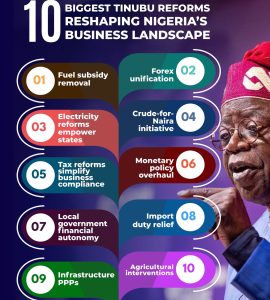
A Nairametrics’ graphic from Facebook
In the introduction to my 2018 edited volume, Entrepreneurship in Africa, and in my 2020 essay for the Review of African Political Economy, I argue that the new, continent-wide push by governments and nongovernmental entities to remake African citizens into self-catering micro-entrepreneurs rests on the fetishization of personal economic responsibility. Responsibility is in turn posited narrowly as entrepreneurial self- reliance.
The idea that Nigerian women, or any Nigerian for that matter, can akara-sell or kulikuli-sell their way out of poverty and into prosperity is a mischievous, escapist lie. The underlying assumption that micro-loans or micro-grants lift people out of poverty, people whom government policy has rendered poor, is a cynical abdication of responsibility. It is not empowerment. It is not opportunity. In fact, it is the denial of opportunity and economic empowerment.
The notion that the solution to poverty—whatever the origins of that poverty—is microcredit writ large enjoyed euphoric reception and attention in the mid to late 2000s. But this inflated view of microcredit’s impact came under withering criticism in the 2010s, in the wake of scandals and revelations about how microcredit immiserated many and led to a cycle of debt and destitution that resulted in many suicides. The aftermaths of microcredit interventions in Africa and in Asian countries like Bangladesh have proven that microcredit impoverished and created debt more than it alleviated poverty. And this may be a charitable verdict. Critiques of the microcredit economic hype have intensified since then, with some critics focusing on the damage microcredit and its accompanying, calcifying discursive orthodoxies were inflicting on Africa. The triumphalism surrounding microcredit as a self-help silver bullet against poverty has since waned.
The problem of the microcredit fetish is both conceptual and practical. First, the impact of microcredit was exaggerated, based not on reality but on overly rosy textbookish projections emanating from neoliberal economists at the World Bank and the International Monetary Fund (IMF). In addition to their epistemological and experiential blind spots, these economic theorists seemed intent on shifting attention away from the harms being done by their prescribed economic reforms and programmes in the developing world. Second, the assumption that microcredit would solve poverty was always based on a racist and classist denigration of poor people as the architects of their own poverty, as incapable of entrepreneurial self-help and economic uplift and as bodies on which ideas of entrepreneurial self-redemption could be grafted. Third, its appeal was always in how it absolved governments and multilateral lending institutions and their superintending officials of responsibility for poverty in the global South while transferring the burden of economic protection and security to the poor themselves.
Fourth, the microcredit consensus was always oblivious to a foundational, commonsensical economic reality: we cannot all become entrepreneurs and shouldn’t try to. A self-evident economic logic is being sidestepped in the question to produce self-proliferating entrepreneurship clusters. If everyone becomes a seller of the same set of goods and services, who will buy whose products and services? Where will the division of labour, vocation and consumption that drives economies come from? As a practical matter, an overcrowded informal economy dominated by sellers operating within a larger formal economy of diminished waged income and soaring unemployment is a looming economic implosion.
An economy constituted solely or majorly by entrepreneurs, whether big and small, would not function effectively. Waged employment in government or in the organized private sector, the engine of the economy and the most reliable source of renewable purchasing power, would be absent from the equation. Jobs, well-paid jobs, are the backbone of an economy, not informalized small-scale service provision such as akara and kulikuli selling. Replacing decently compensated employment with precarious and cannibalistically small informal enterprises substitutes feel-good self-help economic storylines for a calculated vision founded on industrialization, sustained growth and the expansion of the productive domains of the economy.
The over-saturation of the informal economy is not only counterproductive; it has added another dimension to a multilayered economic predicament. This chaotic informality has democratized precarity and household economic instability rather than lift households out of poverty. Keeping households in a survival purgatory is not the same as giving them a predictable, stable and protected platform of economic dignity and mobility. The normalization of precarity has authorized a new national economic doctrine, one that erases the catalytic agency of the state in the economic realm while replacing the organized private sector and the vision of large industrial businesses with self-help informality. What happened to the industrialization vision of the post- independence period, even if industrialization is now a different proposition than what was venerated as economic necessity in the aftermath of colonialism?
The programme of achieving both import-substitution and mass employment through industrialization was an urgent postcolonial priority in the 1960s. It was understood that newly independent African states needed to create or catalyse large-scale industries to absorb working age citizens into a productive waged labour relationship with state- mediated capital. Industrialization and the creation of large industries were advanced as antidotes to underdevelopment and poverty, in part because scale and scalability offered protection against the vagaries of small-scale informal business.
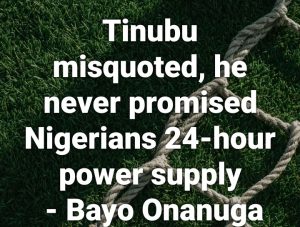
And then this!
Times have changed, of course, and import-substitution industrialization was ultimately compromised by the peculiar deficits of the postcolonial condition that had not been considered or addressed before a`empts were made to build big state-funded and private industries. But the generic logic that industrialisation and large-scale enterprise provide both a pathway to stable incomes and insulation from acute precarity for many citizens remains relevant today. Sadly, this commonsensical logic lay discarded rather than recalibrated for a different twenty-first-century global economy, one in which Africa’s demographic dynamism and resource profile could have been more effectively leveraged. Instead of being revived and reworked, industrialization, capaciously defined, has been replaced by an emerging consensus that every citizen is an economy unto themselves, a potential entrepreneur who only needs a small line of credit or grant to fully take on that assigned role. Atomistic quotidian entrepreneurship has replaced organized, durable, employment-generating enterprise in the economics of African anti-poverty interventions.
A countervailing agenda of normalizing mass small-scale enterprise is ascendant in Nigeria and elsewhere in Africa. The momentum in this trajectory is sustained by a coalition of new and fanatical believers in micro-entrepreneurship, and failed governments desperate to shift the debate from their failures. The era of the mass citizen entrepreneurship is being slyly inaugurated, along with its own vocabulary and rhetoric of entrepreneurial charity and mentorship. Sen. Tinubu’s statement is one iteration of a ubiquitous rhetorical gesture normalizing this redefinition of everyday citizenship as everyday entrepreneurship.
Final Notes on the Revealing Gaffe
The challenge of combating the normalization of small-scale enterprise as a substitute for a healthy opportunity economy is that economically underperforming states are invested in the message that is being challenged. When a government cannot create jobs or enable job creation, it takes refuge in the all-purpose rhetoric of entrepreneurship, which is not a neutral rhetoric of governmental motivational peptalk. When government figures talk glibly about citizens becoming self-sufficient small entrepreneurs, they are often motivated by a desire to blame the poor for their poverty and to transfer the burden of lifting the poor out of poverty to the poor themselves. It is anti-poor classism masquerading as entrepreneurial philanthropy. Seen at a deeper level, it is a strategy for replacing the traditional economy of aspirational, dignified, protected incomes and upward socioeconomic mobility with a brittle, informal economy of small, perpetually vulnerable citizen-entrepreneurs where the government does nothing for the people except to encourage more of them to embrace freelancing.
Some people talk about the so-called ‘great replacement’ in a different context of demography, migration and racial anxiety. That debate obscures the other great replacement, one that is not necessarily anchored on race but is purely a function of global and local capital. An established understanding of the economy and the respective roles of government and citizens within it is being replaced by another paradigm: the citizen is the economy, and the national economy is comprised of fragmented, infinitely individuated spheres of entrepreneurial capitalism.
It is assumed in this neo-capitalist context that the work of creating prosperity and aspirational economies lies solely in combining capital, small or big, with entrepreneurial acumen. Written out of the analysis are secure employments, unionized labour, pro-poor policies and state-superintended safety nets, all of which can combat poverty and help to create and distribute prosperity more equitably. The problem is that when the debate remains at the level of the merits and demerits of akara-selling entrepreneurship, it is hard to see the deeper layers of assumptions and concepts at work. The complicities which enable the fetish of microcredit- and microgrant-financed small, informal businesses to endure remain unchallenged. Diagnostic and prescriptive rhetoric that pathologize poverty are problematic, as are governmental or ideological talking points and policies that lionize precarious informality as a household aspirational economic endpoint.
Sen. Tinubu said what she said, but we must look deeper to untangle the knots of an emerging rhetorical hegemony on poverty and antipoverty interventions. On the surface, she was promoting micro-financed petty trading as a do-it-yourself panacea to poverty and hardship. Beyond the tone and verbiage of her statement, however, she was calling on Nigerians to become citizen entrepreneurs. This connects her speech and its underlying assumptions to a wider, sinister vocabulary of self-help that is not mere innocuous motivation. The rhetorical register in which her statement should be situated and understood has a long, varied genealogy and provenance.
The author a Professor of African History at the University of Vanderbilt in the US, penned this originally for The Republic.