It is not just what happened but how the dream went burst. The dream of Nigeria’s actual and potential leaders that Nigeria was rising as the stallion for the Black world in the same manner as the United States stands for the West and as Israel stands for Jews. It was most predominant among the students in the 1970s and 1980s but not exclusively so as elements in the military also shared that belief, if a recent Facebook reminiscence attributed to Chief Olusegun Obasanjo is not an AI stuff. That applies to the business leaders if Waziri Ibrahim’s quote in late Segun Osoba’s legendary journal article is anything to go by too.
The air was thick with nationalism across the board, the climax of which was Murtala Mohammed’s ‘Africa has come of age’ language game. But Murtala didn’t outlast the echoes of his own voice. Nigeria itself began to descend rapidly from nationalism to insular populism. Religion, ethnicity and exclusionary vibes have since taken over. Still, it is a big story to be told: the story of that great struggle for (socialist) democracy in Nigeria few decades back, a story which would record a disturbing level of radical incompleteness if any detachment of participants is missing from its current unfolding at book presentations, burials, birthdays and similar activities of the leading lights of that struggle.
The University of Calabar was an important centre of action in that struggle and within which certain individuals became the symbols. At Eddie Madunagu’s 80th birthday, they told their story in their own words and signs. When Intervention lunched into the event, Fela was speaking through one of his trademark tracks, signifying that the event wasn’t just another but a solemn one.
But it didn’t take long before Cde Kayode Komolafe told everyone the birthday wasn’t a giant cake affair, among others but a reflective exercise. This, he said, was for obvious reasons, among them the recent loss of BJ whom he called Madunagu’s ideological soulmate and, before that, Cde Bene Madunagu.
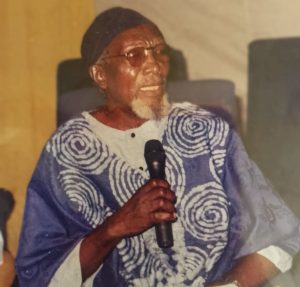
Prof SegunOsoba who held ground at Obafemi Awolowo University, passing away just three days ago at 91
He was delivering his welcome address as Deputy Chair of SOLAR, expressing happiness that cadres from all walks of life and all parts of Nigeria and outside made it to Calabar or online to share in the event. He took note of Cde Eddy’s gesture of offering the Nigerian Left his stock of books as well as those of Eskor Toyo and BJ at his 75th birthday, reminding all of BJ’s depiction of that exercise as the last resort. That is, though the cataclysmic moment was not achieved, there stands something in that socialist archive.
In one moment of the frontier hero’s habit, KK took aim at the absent enemy: whatever anyone may say, no one can deny the generation Madunagu signifies of credit for the virtues of courage, clarity and consistency. For that, they deserve commendation, argues KK who then isolates Madunagu’s Minority Report to the 17-person Politburo IBB put in place in the mid-1980s to fashion a blueprint for national forward march. He connects that minority document to its Left heritage in what Segun Osoba and Bala Usman had done previously in a similar circumstance and which has been so powerful that every version of the Nigerian Constitution thereafter has retained the Chapter Two from the rejected Minority Constitution by Osoba/Bala pair. It would be recalled that in 1984, late ASUU President, Mahmud Modibbo Tukur also followed the Osoba/Bala footstep by submitting a minority report on privatisation. So persuasive was he that the Buhari administration adopted his minority report instead of the majority report of the Dotun Philips Committee on Privatisation. All these showed the relative monopoly of the capacity for discursive articulation that the Left enjoyed.
But KK’s punchline was still ahead: it is a tribute to Eddy’s force of ideas that a government appointed bureau could not but recommend socialism as the country’s overarching pathway. Although Eddy Madunagu was no longer in the Politburo by the time his colleagues rounded off, they could not but end up recommending socialism. It didn’t just happen, he implied.
But it wasn’t KK who began the firing of salvos. Prof Joseph Ushie did. Ushie, a member of the literati and an alumnus of the University of Calabar, was one of the two Special Guests of Honour at Madunagu at 80, the second being Sonni Anyang, one of the fire-eaters of the reporterial corps of the Kano State Triumph Publishing Company in the Second Republic.
An internet reception glitch denied Intervention the first part of Prof Ushie’s intervention. At the point of reconnection, Ushie was contending that his generation (as students) did not listen to what they heard from the Madunagu generation or Nigeria would not have become a corpse today. “We did not do enough, that is why Nigeria has died”, he says, illustrating the death of Nigeria in the contrast today with yesterday in the realm of the diversity of teaching staff in the typical Nigerian university of yore. His list ranged from Americans to Britons, South Africans, Ghanaians, Indians and what have you. “They flooded this same Nigeria. That was the Nigeria we experienced”.
Prof Ushie contrasts this yesterday with today by using his feeding scaler: it was better or he was better fed as an undergraduate than as an academic even after teaching for 40 years. It is a situation he links to a generational failure to heed the wisdom of their teachers such as Eskor Toyo, Eddy and others who preached the radical pathway. The consequence of not following the radical/revolutionary option, he continued, is that the moment of silence caught up with them as graduates subsequently. In other words, they have had to ‘join them’ when ‘they’ couldn’t beat ‘them’.
To make matters worse, Ushie cannot find the pictures which they (students) took with visiting giants such as Achebe and Ngugi. Ngugi, he said, was at UNICAL in 1981. Out of carelessness and not knowing that things would so degenerate, he misplaced the pictures which could have been serving an instigatory purpose. But Prof Ushie has not lost hope. He said he discovered that Madunagu’s hands were stronger than his even at Madunagu’s 80th birthday, meaning that ‘hope is still here’.
Again, it turned out that Ushie was still a case of warming up. Another masquerade was to follow, certainly in the theatricality Cde John Ukam brought to delivery of the Keynote address titled “Radical Thought and Praxis in Nigeria: Reflections on Comrade Edwin Madunagu’s Life and Legacy”. Confessing his ignorance of why he was chosen to deliver the address, he expressed his sense of overwhelming privilege in being at the event. Then he proceeded to unpack the topic from the practice lens of the typical educator. What is radical thought, he asks. He said something which Intervention missed but he seemed to say it is power to develop critical consciousness so that one is not vulnerable to gullibility. Whether this is a correct capture of him or not, his next step was a masterful pedagogical move.
He took one of the common statements around the country in recent years to illustrate his argument: The government doesn’t have enough money, that is why it cannot pay academics the new salary structure” And he asks the typical person making the statement the question of how s/he knows that government doesn’t have the money. And s/he replies: that is what the Vice-Chancellor says. And he would ask in return: Is the Vice-Chancellor the Commissioner of Finance?
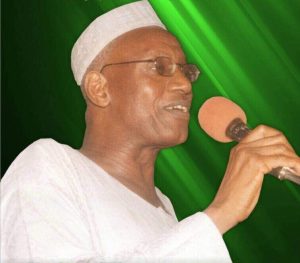
The late Yusuf Bala Usman
He used the imaginary dialogue to illustrate how uncritical many minds work, consuming things they shouldn’t consume without interrogation and believing that which is not a product of situated reading. For him, Nigerians have, unfortunately, become an uncritical lot as asking critical or radical questions can become equated with being in opposition. For him, this is why nobody asks whether Nigeria is truly a country even when it barely has what are required to be a country. Can Nigeria manufacture a safety pin? Has Nigeria got any industries? Can Nigeria defend itself? Can Nigeria feed itself? He reinforces his argument about Nigerians having morphed into any how citizens, unable to insist on any standards in basic sanity, morality and what have you.
But he singles out Eddy Madunagu as the exception, using the quantum of his writings as one evidence. He told the story of asking someone to guess Madunagu’s discipline. the fellow started by naming Political Science before naming two other subjects, never thinking for once of Mathematics which is Madunagu’s discipline but with which he straddled Philosophy, Literature, History, Political Economy, Biography. He further regaled his listeners of Madunagu’s exploits in the organisation of radical politics, all the big names in that realm that he had met in his house years before and trips to different places in Nigeria in pursuit of that mission. He accused Madunagu of excessive generousity. Cde Ukam was certainly a delivery achievement in communicating a serious message through a style bordering on the comical.
Sonni Anyang was particularly interested in the SOLAR project. He believes that when the bourgeoisie has exhausted itself in pursuing the mirage of reform, the archive will be where to start from in resurrecting Nigeria. His optimism is bewitching even though it could be the case that there might be no Nigeria anymore by the time the reformers are done with reforming it. Anyang, as already mentioned, was part of the journalistic squad assembled for the Triumph Publishing Company established by the Abubakar Rimi administration in Kano State in the Second Republic. Nigerians of all ethno-cultural, religious and gender identification were part of the Triumph newspapers then.
Two other symbolic names featured at the Madunagu at 80 event. One is Prof Offiong Aqua, the first president of the University of Calabar Students Union while the second is Grace Osakue, a WINner of those days and late Bene Madunagu’s pair in Girl Power Initiative (GPI). Aqua identified Madunagu as the connecting thread, recalling how he was vigorously scrutinised when he sought to contest as president of the union. Osakue attributed GPI to Madunagu’s generousity, adding how Madunagu took care of the dominant criticism of GPI as being exclusionary of the boys by making provision for the boys. Bene, she said, was at the event in spirit before wishing ‘our dear Eddie’ happy 80th birthday.
Many more persons spoke and there was a film tracking Madunagu’s life as well as a documentary of GPI beneficiaries offloading happy birthday wishes to the celebrant. One point the totality of the testimonies brought out is the grievous error of binary reasoning in the way the Nigerian establishment ‘read’ the Nigerian Left. It read the Left as a subversive group rather than its ‘constitutive outside’ without which it (the establishment) could not know itself.
Now, the establishment has almost lost control of the society because, for instance, there has been no self-conscious Left elements doing what they were doing on the campuses since the collapse of knowledge: informal training of students in multiple domains, especially in leadership. That has left the society with an unemployable surplus of graduates as a major employer of labour made known last week or so. Or, as EFCC boss told the nation about a week ago to the effect that a large percentage of students are into yahoo-yahoo. But he hasn’t seen anything yet because, if students are left without the kind of patriotic mentoring and banners of hope that Left elements were offering in the 1970s and 1980s, students will certainly go into yahoo-yahoo and even worse. No ‘law and order’ sense of national security can cure that.
Edwin Madunagu should, in spite of everything, be a happy person watching the totality of the event. All those statements add to the on-going reflexivity among the out-going generation of activists at recent events across the country since the demise of Prof Okello Oculi last year, the presentation of Aluta Continua (Chiemeke and Uwasomba) in 2025, Biodun Jeyifo’s demise, Prof Yakubu Ochefu’s presentation at Dr Chido Onumah’s recent 60th birthday and, last but not the least, the presentation of late Cde Abubakar Sokoto’s book a few weeks back.
Nigeria is in a very disheveled state. The banners of hope that should cushion the state of hopelessness are not there. The Nigerian State and/or the political parties that should be the primary sources of such banners of hope are offering nothing beyond shocking banalities. The dominant radical sense of how Nigeria should proceed to achieving the developmental status Festus Iyayi outlined in 2010 is the developmental State strategy. It has worked elsewhere, including in Africa. China’s use of it to achieve its stunning scale and speed in social transformation in history has left the world in a pleasant, hope-rising mood about the replicability of that strategy, starting with Africa where the material underdevelopment in mind boggling. China’s astute re-reading of Marxism substantially in the image of Confucianism reinforce that promise a lot. But re-reading of the Marxist interpretation of history has run into a storm in Nigeria. Some would even say it has not taken off at all in terms of re-engaging the waves and grounds of challenges to it as to make possible a refashioning of it in the Nigerian image.
Still, one interesting but equally intriguing dimension is manifesting: the way socialist democracy as a transparent, agonistic process is unfolding in Nigeria without any formal efforts in that direction. All of these are features to be carefully studied, an effort that has also started in a discursive order signified by some recent publications (Chiemeke and Uwasomba, 2025, Oroh, 2025 and so on). This does not undo those who assert that a struggle of that nature in terms of the length of time it lasted, the diversity of tendencies and interpreters involved, the spectacularity of some of the battles fought and the clear areas of achievements as well as of strategic failures needs a more distinctive documentation.