By Adagbo Onoja
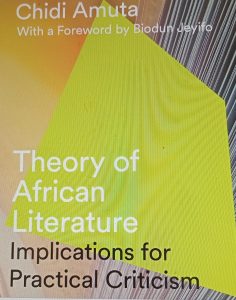
Decades before his death January 11th, 2026, Prof Biodun Jeyifo had ceased to teach in Nigeria. But a knowledge producer is inherently a global supplier, irrespective of location. His death therefore creates a gap worth reflecting upon in relation to the sensitive domain of Marxism and Literature. It wasn’t his only domain of engagement but the one with, arguably, the best contribution to the emancipation project. Where did he stop and what are the questions that remain to be satisfactorily answered? The assumption is that, one day, the outcome of this sort of exploration of Marxism will become handy for successors of this generation whose engagement with Marxism will not be a romanticist sense of Marxism that could not fly.
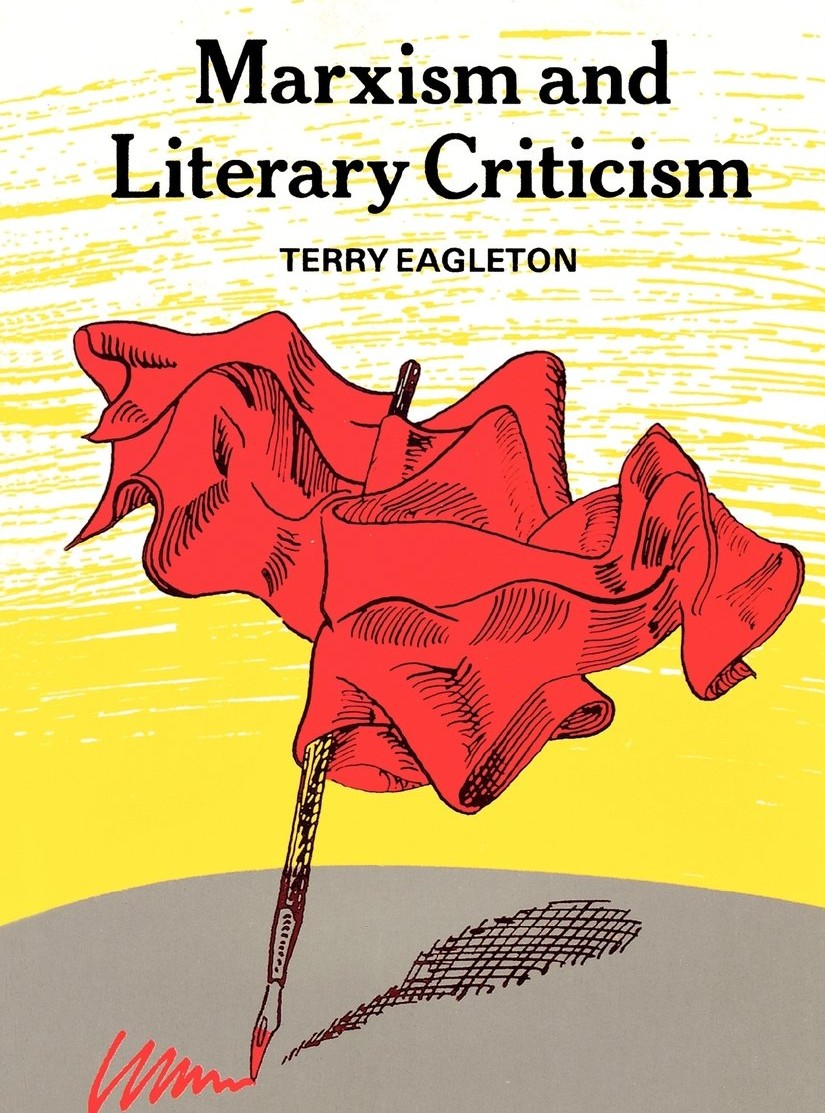
 The starting point is locating the point of harmony between Marxism and Literature in such a way that literature serves the cause of emancipation or revolution, if you want. The Marxian imagination of emancipation is completely materialist although Marx himself is the source of what is today called the turn to the discursive. He did that by the distinction he stressed between the material and the idealistic, and the capacity of consciousness (a property of idealism) to be subversive, thereby giving his critics the gap to ask why he pitched his camp with the material. But that’s not the subject of this discussion.
So, how could the Marxian socialist schema successfully instrumentalise a realm of imagination such as literature? One response to this question is the position of people like Alex Callinicos. He would say that Marxism is a special kind of Realism. It seems safe to say that by that, he means the same thing Eskor Toyo says about dialectic being a special form of thinking. Special form of thinking as to be anything but a theology? This is a point we may have to turn to some of the leading authorities today in Nigeria such as Prof Chimalum Nwankwo, Prof. Tanimu Abubakar, Prof. Sola Olorunyomi, Dr. Muazu Maiwada, Prof. Chijioke Uwasomba and a few more others to determine where the consensus is now.
Groundbreaking!
It has been an interesting question with a long journey. The Frankfurt School version of critical theory has a notion of emancipation that does take its bearings from orthodox Marxism. For it, “Emancipation is the philosophy, theory and politics of inventing humanity”, a take from Prof Ken Booth, one of their leading voices in Critical Security Studies in his book Theory of World Security. Quite radical but leaning more on Kant than on Marx. Their instrument for emancipation is even farther from the Marxian and closer to Gramsci. We see this in Booth’s endorsement of Elsie Boulding thereto: “There is a growing scope for non-state actors, such as the 18, 000 INGOs which are creating what Elise Boulding has called a ‘global civic culture’”. This is part of what makes his “Security as Emancipation” presidential address to the British International Studies Association in 1991 thick, becoming referential for the Welsh School of Critical Security Studies across the world.
Surely, the civil society can do a lot or has done so much in the Cold War, particularly with its anti-globalisation campaigns. But it is not an undifferentiated domain with a same understanding of emancipation. Oxfam certainly doesn’t share the same understanding of emancipation with the National Rifle Association in the US even as both are civil society platforms with UN accreditation. So, Frankfurt School leads us to a cul-de-sac in much the same way that their idea of deliberative democracy crashed in the hands of Chantal Mouffe and her fellow promoters of agonistic democracy. It means having to navigate our way from there before we are paired with Plato and charged with promoting the philosopher-king narrative. Because a major critique of deliberative democracy (and philosopher – kinging) is whether slaves can afford the required rationality to be part of deliberating democracy since slaves are most unlikely to be opportune to go acquire education. So, the puzzle of how literature can serve popular democratic aspirations still doesn’t have a great answer from Frankfurt scholars.
Footprints everywhere!
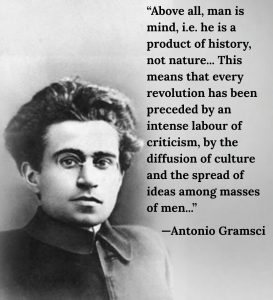
To cut a long story short, there’s a sense in which only Gramsci had the answer by transcending the limitations of both traditional Marxism and the Frankfurt argument. Gramsci’s concept of the civil society as a fighting force, a provider of intellectual and moral leadership through the ‘war of position’ harmonises emancipation with literature which, in that context, becomes a messaging channel. Unlike the working class which is inhibited by the wage labour dynamics from being able to appreciate literature, the civil society is the hub of literature/arts/culture. It understands literature and how to use it within the ‘war of position’ paradigm.
But even Gramsci did not resolve the problem. His anti-essentialism did not reach where he could question the location of the revolution in the working class. It would have been unthinkable for him to do so at the time he was writing. Capitalism had not developed to the level it is today with members of both the working and the ruling classes aiding and abetting exploitation through willing and happy supply of info-data to the new monopolies. Capitalist societies had also not split into constellations reflecting new challenges such as the diverse forms of sexual and gender exploitation; the threat from environmental distress, struggle against war and militarism against weak people and nations; struggle of indigenous people uprooted by capitalist expansion; anti-globalisation campaigns and so on. How can a working class that is kept relatively underdeveloped in relation to constellations born in the furnace of struggle and revolt provide leadership for the revolution?
That question brings in the discourse theorists (not discourse analysts) for whom literature is part of the checklist of rhetorical power resources. That is rhetoric conceived as a constitutive rather than persuasive instrument “in a world without foundations, without a transcendental signified, without given meanings”. And where politics or emancipation is about constellations following a ‘logic of equivalence’ best exemplified by coalition formation against Apartheid (multiple organisations retaining individual identity at birth but subscribing to joining their demands to those of others against a bigger challenge called Apartheid). Here, no division between emancipation and literature exists anymore because even the concept of the literary has widened to just about any texts.
It is a naughty question. I have no idea what post-humanists have to say on it, for example. There is no escaping it in a world of groundless ontology. Whatever we knew about it yesterday has to re-known again today. BJ has done his part!