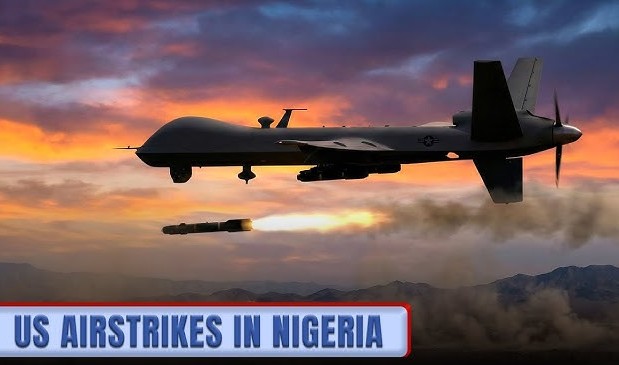
There has been nothing like it before: a US airstrike on Nigeria for whatever reason(s). Predictably, the airstrike is the subject of contestation between those in approval and those against. But that’s at the level of Facebook mainly.
More established voices are either keeping their views to themselves or within their circle or directing them to the appropriate quarters.
It is very unlikely that a consensus will emerge soon apart from the possible conclusion at all levels that the aftermath is something to be managed and managed deftly. Even this may still be elusive.
It is still a developing story. The assumption, the hope and the expectation is that a credible set of leaders of thought would soon emerge and seize the initiative before local champions with uncomplicated understanding of the total picture will impose a corresponding narrative. Formal diplomacy may not have collapsed but the state and its institutions and processes in the past decade and half has been a key part of the problem in what Nigeria is witnessing now and needs to be beefed up in managing Nigeria’s share of uncertainty and complexity arising from the most volatile moment in great power transition from unipolarity to multipolarity.
During the transition, there will be no rules as we knew it and leaders of thought as well as individuals with moral authority might be more competent than formal state processes even as none is a replacement for the other.