By Adagbo Onoja
Again, this is NOT signaling the end of Intervention‘s publishing holidays but a quick theft of time to simply put on record that a reflective exercise worthy of note took place in Abuja December 1st, 2025.
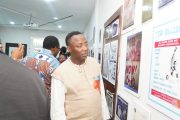
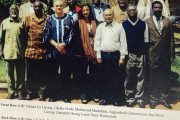
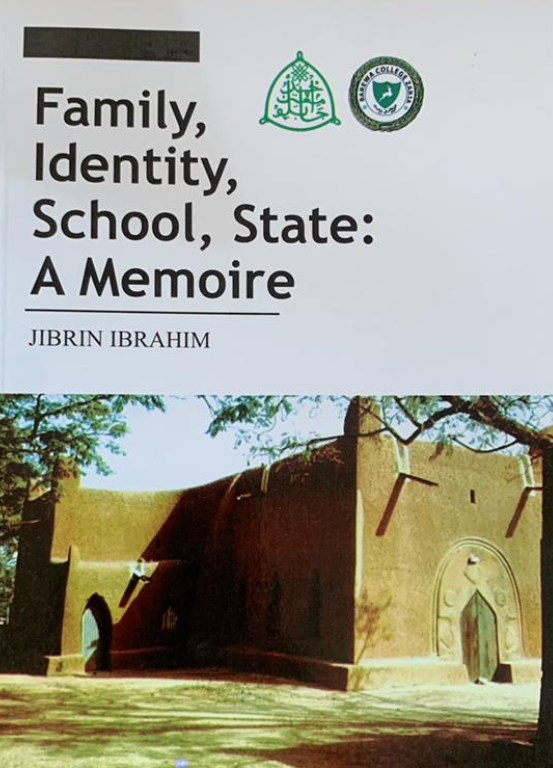
In commemoration of his 71st birthday, Prof Jibrin Ibrahim was located and hauled before a small but critical audience. Facing the audience, the interviewer made him bend back on himself by taking him through a small autobiographical work of his. The autobiographical work is the cover picture of this story.
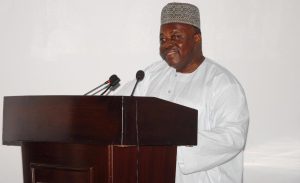
Prof Jibrin Ibrahim from a file pix
What was so important about this? An exercise of that nature might have healing if not course-correction effect on some of our fellow citizens in society torn adrift by rigidity in people’s sense of identity. This would be the case if the audience had been a wider one, preferably younger sets of listeners or if the conversation finds its way into a medium with wider circulation. But it was only halfway this idea occurred to Intervention which is neither part of those who put the event together nor which has the luxury of time to even contemplate transcribing. In any case, it would be so much of work to handle even if today’s digital technologies took care of the transcription. Still, in one form or another, the electronic media can be made to help in the dissemination of the stuff in their own ways.
The arguably most important element of the event must be its pluralism in whichever sense one takes as entry point: generational, gender, regional, religious and possibly class. And, for over two hours, no one tried to assert any identity over its Others.
That is also the kind of meeting and mixing of cultures and differences in most rural Nigeria even in spite of the massive circulation of enemy images in this country today. Be it in Obudu through Ikom in Cross Rivers State or Jigawa in the Northwest, two of such spaces where this reporter has lived long enough, people get along with each other very well. Without denying Anaïs Nin’s powerful quip that “We don’t see things as they are, we see them as we are”, it is still the case that majority of Nigerians have overcome the propaganda that there is an inherent enmity between different cultural, religious and regional tendencies that cannot be understood, negotiated and transcended. Anybody who has been in government circles for even a few hours anywhere in Nigeria can see the high degree of elite crisscrossing and helpfulness to each other.
The puzzle is why this doesn’t come to the fore or doesn’t play out as such in the frame game in Nigeria. Why do we freeze the identity of law breakers and criminals by territorialising their identity to their ethnic and religious affinities? How far would the Jibrin Ibrahim story instruct against this, particularly in Northern Nigeria where identity politics has become the all-consuming battlegrounds without anyone still left to weave a unifying banner of hope?