It should be a great news that the People’s Redemption Party (PRP) is back in the Nigerian political space. Nigeria’s foremost populist platform has been missing in action relative to its historical and ideological symbolism..
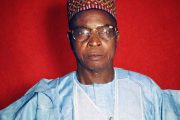
According to several reports Intervention has read, the party now has Dr Hakeem Baba-Ahmed as new National Chairman. The PRP can hardly find a better fit person at this point than him. He is intellectually, ideologically and technocratically very appropriate. Dr Hakeem is not known to habour sub-nationalistic traits, a very scarce commodity now in an utterly divided Nigeria. Above all, he has been involved in managing the sore points of diversity in the North in particular.
The PRP’s return brings back memories of its exploits in the 2nd Republic when it made a midget of the National Party of Nigeria (NPN) by making it lose Kano and Kaduna states. It was NPN’s electoral burial before the military completed the formal burial in December 1983.
 Intervention recalls that, throughout the 2nd Republic, the debate was on the extent to which the PRP was radical. The late Prof Eskor Toyo’s retort was that the PRP was where any radical activist should find him or her or themselves. Many agreed with him and the PRP was, throughout the period, an ideologically heterogeneous basement for radical liberals, centrists, Marxists, social democrats and just plain, decent party members.
Typical of populist parties, it had its own series of splits but was a force for good within the progressives camp in particular till after the 1983 coup. Some analysts still insist the PRP was a reason for the coup because the conservatives had to resort to rigging to retain power in the 1983 General Elections. The truth or otherwise of such a claim is now neither here nor there.
The more crucial question now is how the PRP survives in Nigeria of today. It is not materially wealthy unless magic happened ahead of its rebirth. The new leader, Dr Hakeem Baba-Ahmed, is not known to be a wealthy person either. Yet, Nigeria of today, unlike the 2nd Republic, is a highly monetised society. The value frameworks have shifted from whatever they were between 1979 and 1983.
The larger Nigeria into which the PRP is back is a deeply divided polity. Intergroup suspicion is rife and the country itself is enveloped in diverse forms of violence.
The elite doesn’t appear to be held together by any clear sets of values other than struggle for political office. Corruption is generally rated to have grown in magnitude. The national image of the country is not much to write home about, something the new Chairman must be on top of, having been there before. The institutions are barely functioning. Electricity supply is very poor after a decade of privatisation.
What can a PRP do to this Nigeria, coming into the arena very close to the elections? There should be grounds for hope even as scarce as the banners of hope. After all, there is something called radical contingency which worships at only its own altar as far as Intervention knows!