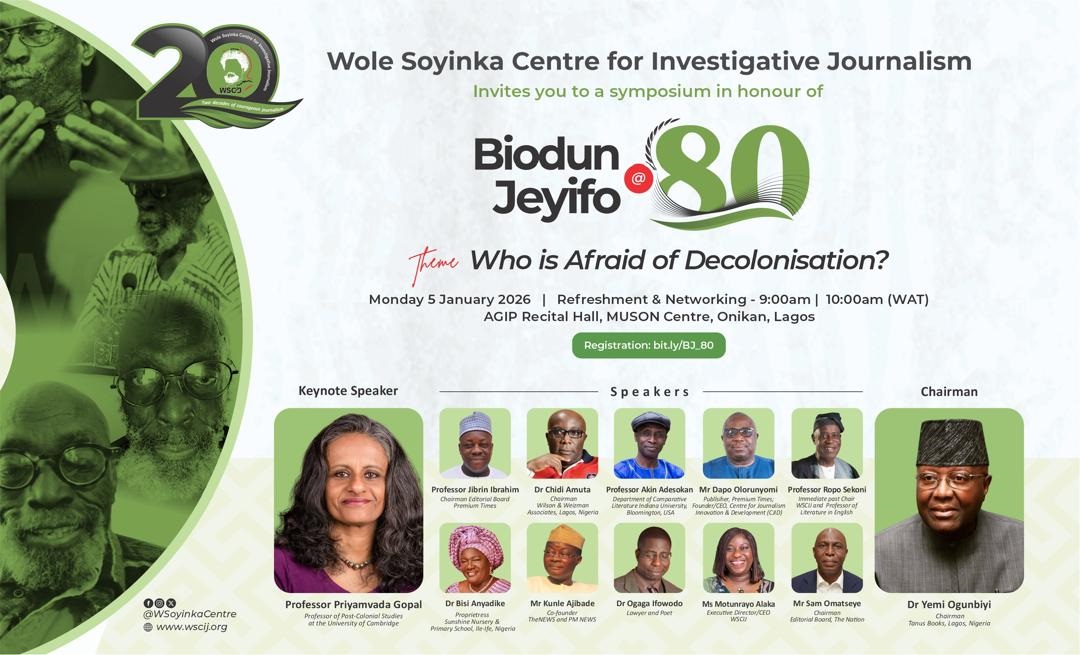
Even as Nigeria turns more and more incomprehensible, an oasis is popping up somewhere in Lagos on January 5th, 2026. An oasis of ideas rather than the typical false events and celebration of vulgar Liliputianism enveloping Nigeria.
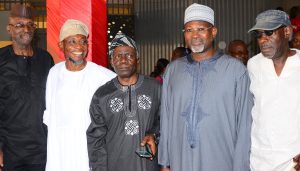
Faces at a previous birthday
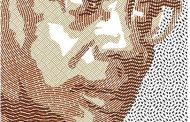
On January 5th, 2026, Biodun Jeyifo will turn 80 and, according to details Intervention has drawn from BookArtVille, his circle of friends, activists and former students have put up a reflective session. Such an exercise implying an oasis in the very dry space of ideas in contemporary Nigeria constitutes the first significance of the day from where Intervention is seeing it.
The Jeyifo persona as well as the theme for the celebration is obviously aimed at enabling Jeyifo (and others) present a progress report to the world of scholarship on Marxism and Literature, a process in which Jeyifo has been highly involved. So, the second significance of the day is the opportunity of getting such an update from the sort of persons involved, people who can tell us with some authority how scholarly and ideologically rewarding and/or tense and unhappy a marriage between a completely materialist bridegroom and the imaginative bride has been. Although we are now in the era in which relational epistemology has destabilised all the boundaries as we knew them, the academic cum political significance of this dimension remains crucial, even if we cite just Olufemi Taiwo’s Against decolonisation: Taking African Agency Seriously in relation to decoloniality.
On the whole, it is interesting to see the names on the list of resource persons for the event: Chima Anyadike, Bisi Anyadike, Chidi Amuta, Jibo Ibrahim, Yemi Ogunbiyi, Kunle Ajibade and Ropo Sekoni. But, from the list, it looks like what happened to Political Science might be happening or has happened to Literature too. With the possible exception of Akin Adesokan, the list contains no names of those who should have clearly emerged by now as the new thunders in the discipline/successors of the Achebes, Soyinkas, JP Clark, the extraordinary Abiola Irele and several others. Properly located in generational terms, Adesokan, Ogaga Ifowodo and Sam Omatseye can neither be grouped in the above list nor in the generation below them – those in their 28/33 – 48/50 age range from where the new thunders should have thrown up texts pointing in that direction.
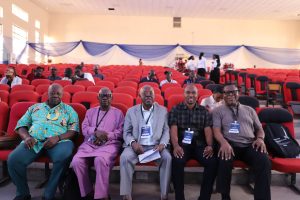
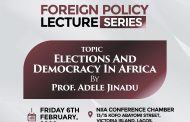
Faces of some members of the elders club @ a recent event in Jos: Prof Adele Jinadu (in indigo colored dress) Prof Nzongola Ntalaja from the DRC (in suit) and Prof Okwudiba Nnoli. Prof Jibo (1st left) is still almost a decade away from that club.
As in Literature, so also it is in Political Science: we cannot see the successors to the Akes, Nnolis, Jinadus, Akinyemis, Elaigwus, Oyovbaires, Bala Usman, Onoges, Otite, Iyayi, Toyo, Onimade, Ola Oni, Olajide Aluko, Ralph Onwuka, and several others. (I am collapsing the non-existent China Walls between Economics, Anthropology, History, Sociology and Political Science, International Relations, Development Studies, Cultural Studies and the likes). There is, indeed, a layer in the case of Political Science – about 15 of them – which can be regarded as the successor generation but many of them are already out of the university system (serving the state system or have japa or are on the verge of doing so or retiring somehow).
It should be an uncomfortable reality that the world is not hearing from younger minds, whether trained at home or abroad, amplifying, departing from or reformulating the texts which defined the names we find in the elders club in Political Science. With the possible exception of Ake (the luckiest of them if we take note of what ex-UI academic, Jeremiah Arowosegbe, has published on Ake), there is not that sort of works on the exertions of those of them who did a lot on federalism or the group in foreign policy, public policy or security. Yes, there have been considerable works on ethnicity, religion and identity politics (Osaghae, Jega, Alubo, Ibeanu, Jibrin Ibrahim, Egwu and Jega and several others) but there has been no substantial departure from Nnoli. Yet, Nnoli is a major text on ethnic identity politics by which we can measure departures and arrivals in that domain. It must surely be a puzzle that there is not a single text on ethnicity from a Lacanian perspective, not even with the paradigmatic promise of such an endeavour in a place such as Nigeria. So, what is happening? Is it possible that these texts are there but we are not ‘seeing’ them or they are just not there?

Surely, a landmark text but due for re-problematisation by a younger Nnoli
This event is more for Literature but it is also for knowledge production. If we focus on Literature and Political Science, it is just about exemplifying our claims, not that there are rosier pictures anywhere in Economics, Anthropology, History, Sociology, Geography and the rest. But is all of this manifestations of collapse in generational transition stemming from collapse of the university system or collapse of the state? Is it the collapse of the university system that then led to the collapse of the state or the other way round? And what does an event like this speaks to in terms of what ‘we’ are doing about the situation: residual eruption in activist terms or episodic approach to struggle?
Intervention is with admirers and critics of BJ in wishing him a great arrival at the table of the 80- year old. We wish we too may make it to that age in an age in which the ‘African condition’ is said to be heading to where activists, particularly Rosa Luxembourg and our own Ake, had told us survival would not even be guaranteed. Yet, survival is the lowest form of existence, the nasty world the knowledge/power paradigm is our unfailing instrument against via the constitutive force of knowledge production!