By Adagbo Onoja
What literature can do in the meaning – action nexus whenever and wherever a particular meaning of a literary text is made consensual makes a book club such as Tunani Initiative an emancipatory project in setting for itself a revivalist agenda for literature in relation to reviving the civic space in Nigeria. The civic space in Nigeria is all but captured and occupied by mediocre and mercenary profiteers celebrating Liliputianism everywhere, from politics to research, business and even academia. Yet, without the civic space, the social (democracy, justice, rights, equity, inclusiveness, etc) is impossible anywhere in the world, including Nigeria, of course. Tunani Initiative is thus one of the few developments to be happy about in terms of Nigeria’s survival at a time of severe political cholera. Intervention could not attend the inaugural digital session (partly because the invitation came too late) but it has been able to pick and organise snippets from the session as in the report below.
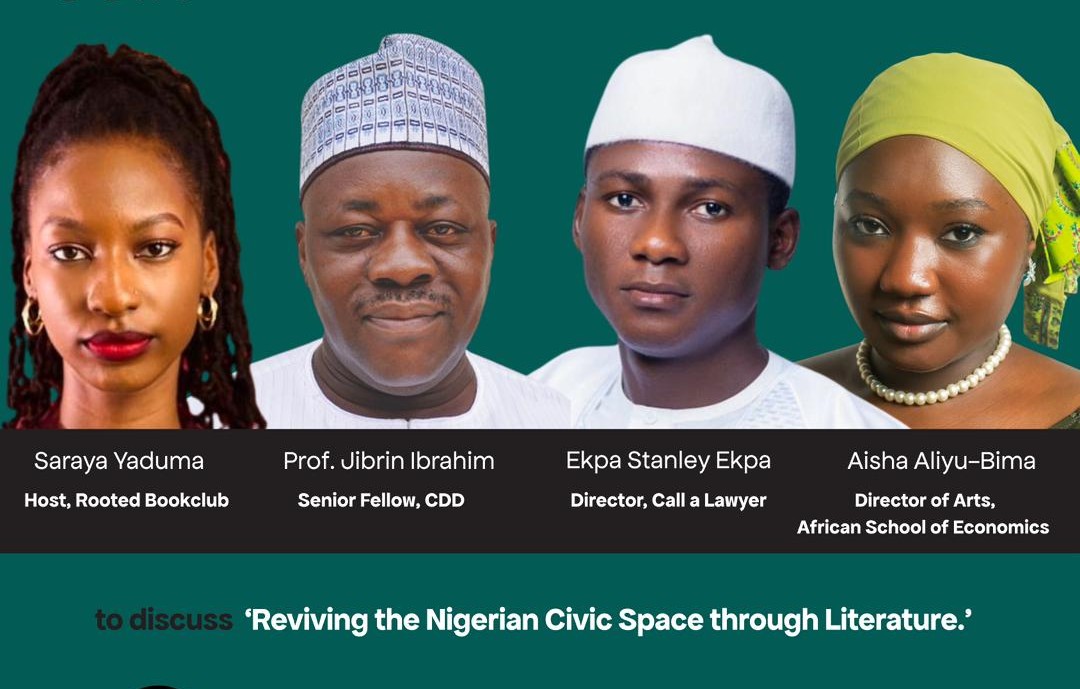
 Four panelists defined the session. Yet, just that four is inclusive of nearly all the identities in Nigeria at the cultural/regional, religious, gender and generational levels. The voice level of the speakers, however, favour Prof Jibrin Ibrahim. So, if he gets better attention in this report, blame technology and the very poor quality of internet reception between 12 noon and 2pm on Tuesday, May 20th, 2025. That made it impossible for the others to be heard.
Mairo (Maryam) Ibrahim, obviously the chief protagonist of the Tunani Initiative but who also became the accidental moderator (her words) opened the session by asking Prof Jibrin to respond to the question of how literature became part of his training in Political Science training. To this, Prof Jibo initially isolated Achebe’s classics – the forceful reconstitution of the society by colonialism in Things Fall Apart; the betrayal of the people by the postcolonial elite in No Longer at Ease; the instrumentalisation of politics for personal aggrandizement in A Man of the People and a critical appraisal of what the military has done to the society in Nigeria through cabalistic fabrication of leadership in Anthills of the Savannah. That is, the emergence of the culture of a cabal around every leader telling him nothing other than that he is the greatest wonder to ever rule Nigeria and to which the leader falls in agreement such that anyone who says anything to the contrary becomes the enemy.
He then referenced how Soyinka carried Achebe’s message in Arrow of God to his The Trial of Brother Jero in terms of the ideological subjugation of the people rather than salvation of the soul. Soyinka was to illustrate the nastiness of the Nigerian State with his The Man Died, said Prof Jibo.
Jibo was succeeded by Barrister Stanley Ekpa, a lawyer whose legal education was laid on a literary foundation. Stanley had started with Achebe too – The Trouble With Nigeria – before Ngugi Wa Thiongo captured him through Weep Not Child. But it was Ben Okri’s The Famished Road that shook his being because Okri closed the Enlightenment binary between the material and the spiritual world in Western literature, capturing the Stanleys starting their Law degree at the Obafemi Awolowo University, Ile-Ife of those years.
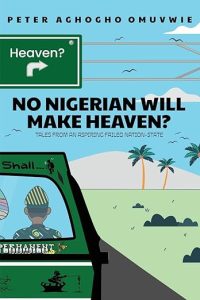
For Stanley who calls literature ‘the oxygen of expression’, the arts/literature – civic space encounter keeps evolving, a claim he cites Peter Omuvwie’s No Nigerian Will Make Heaven? Tales From An Aspiring Failed State as its demonstration.
Aisha Bima, described by Mairo as an arts curator was called to enter the conversation on how arts and literature are responding to Nigeria’s current socio-political realities, with particular reference to checking authoritarianism through arts. Bima turned out to be the voice of Nigerians who never experienced military rule and is keen in generating a momentum against complacency of the people regarding how democracy can be vandalised if people are not going to secure it. Arts and literature are, in this sense, tools by which the social can be enacted. Helon Habila’s Waiting for an Angel is the culprit in instigating her own literary cum artistic consciousness before comics, satire and newspapers added their own dimension, particularly with reference to connecting with people and criticizing leaders within the overarching framework of democracy.
 Prof Jibrin Ibrahim had to be invited at this point. He took the place of Stanley Ekpa who would have spoken on how literature is addressing the civic aspirations of the youth but for the poor reception. Jibo anchored his intervention at this point on a recent film King of Boys and its depiction of the capture of the political space by godfathers and their gangsters. The capture is so total as to create the impression that there is no civic space left for the youth to seek. But, as a sequel to the film shows, the civic space can never be completely captured by any set of godfathers and gangsters although the fear is deep in Nigeria that the power of money has secured the civic space for godfathers. Jibo cites Dele Farotimi’s book, Nigeria and Its Criminal Justice System in terms of civic aspirations of the youth in the construction and constitution of the civic space in recent texts. That is in addition to Niyi Osundare’s poetic intervention, My Lord, Tell Me Where to Keep Your Bribe. The two texts are powerful messages because they are compelling definitive actors in the civic space to come to terms with the question of ‘what is to be done?’, said Jibo.
For Jibo, the obvious assumption on the part of godfathers that they are in total control could be a misleading one because only God could be in control. And if that is the case, then the belief in very corrupt and unethical pathways to power could create problems for the entire ruling class somehow someday.
When Stanley Ekpa eventually managed to reconnect and he was asked to take the floor, he too spoke to Dele Farotimi’s book, digressing a bit from Jibo’s reading. Although Stanley too has no fundamental objections to Farotimi’s book, he thinks a blanket re-inscription of the judiciary as hotbed of corruption is not good enough. He would have wanted to see more specific illustrations or instances of acts of corruption or what he calls “facts that will can aid this generation”, details that are beyond reducing the judiciary to an ‘everywhere is bribery’ narrative. His concern has to do with his feeling that this generation is not so patient to research or interrogate received information. Without interrogation of received knowledge, dominant producers of social media data have become controllers of that space, with no serious debate over what they circulate. He was echoing a piece he has done on Farotimi’s book.
One is no longer sure now if it was Stanley’s submission or the theme of more meaningful engagement with the digital space which became the provocation for what sort of social media model Very Dark Man, for instance, is. Three standpoints contested space here. The first voice contends that Very Dark Man could be a model of how to capture the attention of the youths but nothing more. The second one said he is a good model of internet engagement. There is certainly a third position but which I can’t find in my scripts immediately.
Even if art/literature mirror the social unproblematically, the mirror still has to be politically canvassed to strike
It was another return to Prof Jibo because the moderator wanted a recap of how it was in Jibo’s days that radical students activism blossomed but not anymore now. Jibo was at the center of the processes as a radical student who graduated into a radical lecturer. Jibo’s situated reading of it is that the Cold War explains in part how it happened. Vast amount of literature made available by Progress Publishers from the defunct USSR with Marx, Lenin and others operated in opposition to the American lens on the world and that opposition defined how much of the students looked at the future. The radical choice won. At the time, students were not even aware that there was anything called funding. Rather, they funded themselves and perceived themselves as active players in world politics, well beyond solving Nigerian problems. As such, they were there in Palestinian struggle for homeland as much as in American violence in Vietnam and so on.
His argument is that the extreme monetisation of politics away from engagement with ideas has scaled the focus differently. Until #ENDSARS ruptured the belief that students have completely forgot about radicalism or the culture of confronting the state directly aimed at expanding the civic space to accommodate them as a collectivity. The trend, said Jibo, has not abated, citing how ideas from a book club at the University of Ibadan grounded certain political actions.
Ayoola Omole, obviously an activist, intervened to ask how literature could take on board the ‘old’ and new forms of messaging, a question Aisha Bilma responded with a brilliant home truth about the imperative of the revivalist/radical establishment learning to master getting into the new digital spaces.
We are now in an attention economy, she says, arguing that messages must be catchy to arrest the audience with the new tools available today to do this, notwithstanding the intrusive way algorithms force what she calls negative and reactionary stuff into the digital space. She cites King of Boys which she said caught the attention of a lot of Nigerians, shifting the perspective of even those not enamored of films or of political contestation. That makes King of Boys a sharp contrast to Big Brother which celebrates expressionism to a point of serving no ideological messaging essence. Aisha could as well have been addressing the Nigerian Left and saying it is one thing to have a great message in Marxism but a completely different thing how the message is packaged and delivered. Aisha used one concept one didn’t get properly: bookstagram.
Arts and literature can be slippery to pin down to anything. It can be productive of all manner of outcomes, never in itself but depending on how it is interpreted and which particular meaning of a text is made hegemonic at any one particular time. Instructively, Jibo said the ways of literature can be complex and surprising. We got two striking instances of this. Rarara, a Kano praise singer is today the most influential critic of military rule and thus a one-man force for democracy in Niger Republic because the entire Nigerien community is said to listen to him taking on the military regime in their country. It is not so much a question of who might be sponsoring him. Rather, it is a question of what is he re-activating and re-inscribing with such an appeal to his Nigerien audience at this point? To stick too much to who might be sponsoring him is to miss the hegemonic point of his message and, by implication, miss how to produce a counter-hegemonic narrative.
It is in hegemonising its perspective of any literary text of its choice that the potential of Tunani Initiative (and its book club and all other book projects) in relation to reviving the civic space lies. But the starting point was inviting!