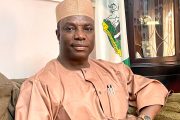
The last day of the burial rites of Dr Bala Takaya, the late leader of the Middle Belt Forum, (MBF) provides an occasion for reflection on the intelligentsia and Nigeria’s future. It does so arising from the situation whereby none of the prominent regional platforms today – ACF, Afenifere, Ohaneze, SSPF and the MBF – is headed by anyone less than a well heeled member of the intelligentsia. Dr. Takaya was an academic, an author, a technocrat and a politician. At death, his significance, however, lay more in his leadership of the MBF.
Ordinarily, that ought not to have been a cause for worry. After all, there is something called emancipatory ethnicity where ethnicity is instrumentalised against structural violence in favour of emancipation. Where that is not the case, it could be in its facilitation of the celebration of group self: narratives of origin, symbols, totems, festivals, language and so on. In such cases, ethno-regionalism becomes emancipatory by guaranteeing the human family as an ensemble to which every culture, group or identity has contributed something. That is why the Unite Nations fights so that no language dies, for instance, because when that happens, humanity loses something. Ethno-nationalism is thus not automatically contradictory of nationalism or of progress or we would not have such emergent concepts as multicultural constitutionalism.
In the case of Nigeria today, none of the above scenarios is the case. Instead, the ethno-regional platforms and their leadership have emerged as platforms for resisting the state by not only posing the questions in maximalist, exclusionary terms but framing the resistance in terms of decentering the state altogether. As such, Nigeria is, today, effectively a stalemate between the unformed BreakNigeria Movement and the equally unformed BuildNigeria Movement. The former covers all those on their marks and set to hit the ground running should anything trigger Nigeria into unraveling while the latter covers all those who argue that the coming global order out of the current interregnum would be one of mega states for which a strong, purposeful but centralised state is required for survival in a difficult world. None of the two is new.
BreakNigeria is an idea which has been sedimenting in the popular press and in the minds of all manners of circles, some of whom are already enacting it now in various forms of confrontation with the Nigerian military, from the forests of Sambisa to the Southeast and the swamps of Niger Delta. BuildNigeria rests on the wager that only a national elite of a strange constitution could, for any reasons, be thinking of walking away from a ready made mega state such as Nigeria, with all its potentials for coming first from behind. Instead of talking about difficulties in inter-group relations, it would have been best to keep investing in the search for models of managing the national question such as what the eggheads who came up with the Zoning Principle accomplished.
Many of the camps in BreakNigeria do not argue against the global movement towards mega statism in which the strong, centralised state is the defining feature. They are also not ignorant of the plausible benefits of such an alternative future. The argument from that quarter now is that ‘Restructuring’ or ‘True Federalism’ has been imposed on them and that herdsmen violence is not an innocent happenstance but the departure tunes of those they are holding responsible for that.

The late Dr Bala Takaya
The argument here is that those who read any of these claims as anything but discourses would be making a big mistake. None of these has anything to do with who is speaking the truth and who is telling lies. They are all about power and power relationship, a continuation of the historical contestation between the regional entities the British constituted Nigeria into. The danger, however, is that discourses can be productive of the reality they speak of. The implication is that the rhetoric as well as the ‘silences’ attendant on the contestation could trigger a convulsion of imponderable proportions. This is simply because there is a fluidity now that never existed. Although those for Nigeria’s continuity are also working hard, the forces of breakup are more assertive, vocal and persistent. It is not just the fear of the worst in terms of Nigeria breaking up but the possibility of the precarious balance between the Quitters and the Remainers degenerating into an outcome we cannot live with. Rwanda remains the best reminder of that sort of scenario. Yet, Rwanda is not as big as some states in Nigeria.
It is in this context that the denial attitude to break-up intentions on all sides in this country today, openly and routinely declared in media interviews must be the most incomprehensible reality of our time. Again, it is the intelligentsia. Is there time left for denial without each and every one of us being complicit in horror, genocide or whatever such fate that could befall Nigeria? This country is paying a price for past military regime’s governance practice of banning political parties, leaving the space open for the emergence of ethno-regional platforms for agitation. But there should be a way of managing their self-understanding away from the current conscious and unconscious decentering politics. It is not unheard of for an intelligent state or ruling group to make a virtue of strategic concession such as the Chinese State grants her minorities. Unfortunately, neither the state nor any other set of actors have any open mechanisms for doing that in the Nigerian case. That Nigeria has no formal and open arrangement for engaging manifestations of sub-nationalistic self-understanding is not a measure of the unreasonableness of those who share such understanding but, even more importantly, a measure of Nigeria’s own impoverished conflict management orientation.
There is still every basis to stand with Nigeria. Nigeria has not been able to operationalise much of her potentials mainly because it has not been governed or guided as is required for the transition from semi-industrial entity to an industrial society. Instead of being governed, it has been ruled by another set of the intelligentsia constrained by their own professional orientation and complexes from taking a constructive view of history as well as Nigeria’s diversity the same manner the founding fathers of the United States, for example, did by constructing her in a global leadership gaze. We call it imperialism, they call it ‘the city on the hill’. It was by that constructivism, more than anything else, that her rise from a colonial entity to a super power can be explained. The national imagination that would have acted as a glue has been missing in the case of Nigeria. It is thus not in the nature of the Quitters or of the Remainers alone that we can trace all the decentering pressures.
Still, it is not national chauvinism to argue that Nigeria is the guarantor state of the black world. There are just too many for whom the disintegration of Nigeria will be so colossal a symbolic and cultural loss, from North America to Latin America/Carribeans; from Europe to Australia; from the Middle East to Asia. In other words, there are so many who, along with their Nigerian counterpart, would become permanent bystanders in world affairs because the world is still a world of power and into which only mega states have been admitted in the post Cold War. Nigeria is heading there at current demographic stature but more than demography is required.
The intelligentsia in Nigeria will, therefore, be making the mistake of their life if they walk Nigeria into just any careless pragmatic accommodation with problems of the moment. The task at hand calls for a strong but informed, sensitive and balanced state in which everyone has a stake. Nothing stops the emergence of a clearer set of the intelligentsia from mapping and marketing a new future. Front or back, it is the intelligentsia.
While condoling the Middle Belt Forum, Intervention feels it is important for the region to rethink its analysis of contemporary Nigeria from decentering Nigeria to recentering itself in the heart of Nigerian politics. By the history of its contributions to nation building, it is not proper if its narrative of today is such that makes her a baby of Nigerian politics tomorrow. The contingency of meaning entitles the Middle Belt and its leaders as well as every other region to hold a specific notion of Nigeria. That should not include anything that could remotely suggest or unintentionally produce disintegration of the country, now or in the near future. Nigeria cannot break without strategic impasses. Without suggesting an imperialistic bearing, Nigeria should be aiming to become bigger, not smaller. And if that doesn’t happen, we have the intelligentsia to hold. There is nothing radical or idealistic in all these!

Comrade Uche Onyeagucha, a product of the radical student politics of the late 1990s, a lawyer, a former member of the House of Representatives in Nigeria who resisted corruption and a guber... Read more
Arising in the period after Professor Yemi Osinbajo’s consultation with various constellations of the power elite in Nigeria must be the question of the most important raw materials fo... Read more