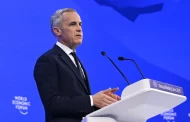
By Chris Kwaja In what translates to beating a loud drum of caution at the World Economic Forum (WEF), in Davos, Switzerland, Prime Minister Mark Carney of Canada, became the rallying point... Read more
As members of the power elite in Nigeria are lost in unproductive bickering along ethno-regional lines and while their leading ideologues such as Gov Nasir el-Rufai are still parroting slave... Read more

Later this week, a new book will enter the bookshelves across the world. At a time intellectual enemies and intellectual defenders of capitalism are locked in battle like never before, any b... Read more

This piece has been reproduced from Spiegel Online, the electronic version of the Hamburg based Der Spiegel magazine where it was originally titled “Erdogan’s Endgame: Turkey’s All-Powerful President Grabs for More” (June 22nd, 2018). Located in such a way that it is interested in Europe, Asia and the Middle East, Turkey is both a tempting topic as well as a nightmare for students of International Relations. The agency of the Turkish president seems to be no less if this piece is anything to go by – Intervention

The author
By Maximilian Popp
The elections in Turkey on June 24 will determine President Recep Tayyip Erdogan’s future and his legacy. He is currently at the zenith of his power and is looking to add even more. But he remains desperately afraid of losing it all.
The president begins his day with prayer, usually between 5 and 6 a.m. depending on when the sun rises. Then he spends half an hour on the treadmill and lifts weights. He has a light breakfast since he suffers from diabetes and drinks tea from the Black Sea. He reads memos from his advisers and the newspapers, usually the Islamist ones along with Sabah, which is run by a relative. At 8 a.m. Recep Tayyip Erdogan meets his Chief of Staff and his spokesman to go through the agenda for the day. At 11 a.m. he makes his way to the presidential palace.
Erdogan lives with his wife in a villa on the grounds of the palace, which is located on a hill on the outskirts of Ankara. He had the palace built in 2014 and it’s a fortress that encompasses several buildings with a total of 1,000 rooms, a bunker and a clinic. Visitors are collected by car and brought by tunnel to the respective wing. The building is symbolic of the reign of this president: terrifying, powerful, isolated, controlled.
In February, Erdogan turned 64. He still wears the same moustache he did as a younger man, but his cheeks have sunken and his brow is marked by wrinkles. In 2011, he had, it is said, a benign tumor removed from his large intestine. And he still sticks to an extremely tough schedule. Every day, he meets with cabinet ministers, legislators and mayors and controls every action taken by his government, no matter how insignificant. He always carries a notebook with him in which he is constantly jotting things down. He seldom returns home before midnight, and he expects the same of his employees.
He has governed Turkey for 15 years, first as Prime Minister and then as president – longer than any previous Turkish politician. And now, on June 24, the country will go to the polls for parliamentary elections. The presidential election is on the same day, and Erdogan hopes to be returned to office with more power than ever before. It would transform him into an autocrat, any semblance of separation of powers would be essentially passé. Turkey would become synonymous with Erdogan.
But who, really, is this man, whose destiny is so closely entwined with that of his country? He is a person about whom we feel we know a lot, yet so little is actually known about him. How does he rule? Who does he trust? How does he behave among his closest confidantes?
 Over the past several months, DER SPIEGEL has spoken with more than two dozen of those closest to the president, including advisers, government officials, party members and ministers. Most insisted that they not be named: They are eager to talk about Erdogan, but they are also worried about angering him.
Nervous and Wary
Combined with internal government documents which DER SPIEGEL has seen, these interviews have made it possible to paint a profile of the Turkish president: Someone at the height of his power who is nevertheless obsessed with the idea of losing it. A man who feels misunderstood and essentially only trusts his family, a state of affairs that has led to tumult within the government. He has become a patriarch surrounded by silence. Nobody laughs in his presence. Ministers lower their voices when speaking with him, their faces becoming solemn, almost stiff. They look towards the ground, nervous and wary.
Erdogan, they say, is quick to lose his temper. His fits of rage – slapping an employee or throwing his iPad at them – are legendary. Sometimes, he uses these outbreaks deliberately. At the World Economic Forum in Davos a few years ago, he was part of a podium discussion together with then-Israeli President Shimon Peres. He became visibly agitated, calling Peres a child killer, arguing with the moderator and ultimately storming off the stage. His advisers were embarrassed by the performance, but Erdogan’s supporters celebrated him when he returned to Istanbul.
Despite having been in power for 15 years, he is still able to present himself as a man of the people. He is a populist, able to captivate people and appeal to the masses. When he speaks on the campaign trail, such as at a recent, early-June appearance in the Black Sea city of Zonguldak, supporters are brought in from across the country to see him. An anthem, written especially for him, blares from speakers and the streets are lined with his portrait. Prior to delivering his speeches, says a former speechwriter, he has a memo compiled including facts and figures so he knows everything important about the town where he is speaking. And his audience is left to wonder: How can he possibly know all of that?
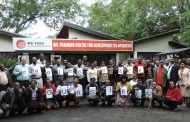
Arusha, the Tanzanian city where the late President Julius Nyerere declared ‘Ujamaa’, (his cultural Socialism) 51 years ago is again the venue of a possible new declaration about getting the... Read more

Jacob Zuma did not wait for the deadline of Wednesday midnight. He left two hours before the deadline. It must have become clear to him that he had lost it at last. The ANC and the people of... Read more